
Company Services
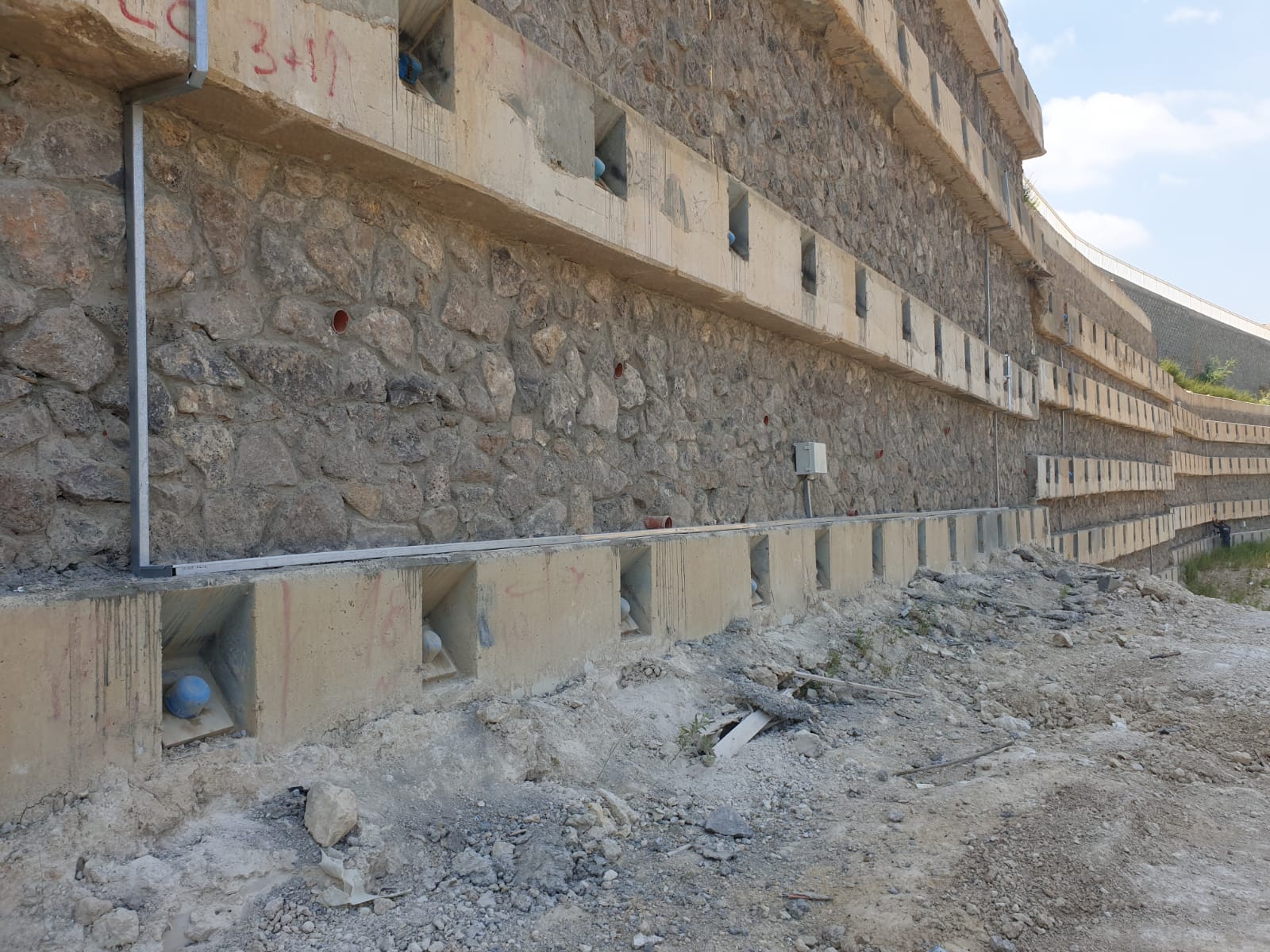
Laboratory Testing of Ground Anchors
Our anchor and soil-nail testing department specializes in performing load tests, acceptance tests and trial tests for ground anchors according to the requirements of Israeli Standard 904 Part 4.2, and for soil nails according to the requirements of Israeli Standard 904 Part 4.1.
Company Services
Laboratory Testing of Ground Anchors
Our anchor and soil-nail testing department specializes in performing load tests, acceptance tests and trial tests for ground anchors according to the requirements of Israeli Standard 904 Part 4.2, and for soil nails according to the requirements of Israeli Standard 904 Part 4.1.
The tests are carried out on site, using hydraulic equipment and precise measuring systems, and in accordance with the designer's requirements, the engineering specifications and the relevant professional standards.
Purpose of the Tests
The purpose of the anchor and soil-nail tests is to verify that:
The structures meet the requirements of the relevant standards
There is consistency between the design and the actual execution
The anchors and soil nails can safely carry the design loads
Adequate safety reserves are obtained in accordance with the geotechnical requirements
Reliable information is provided to the designer and the soil consultant for engineering decision-making, including excavation-work permits
The tests provide the developer, contractor and designer with an accurate and controlled status picture before advancing to sensitive execution stages such as excavation deepening, stage release, structure loading and more.
Who needs the tests and why?
According to the requirements of the Israeli standard:
According to IS 904 Part 4.2 – load tests must be performed on 100% of the ground anchors in the project.
It is recommended that the tests be performed by an accredited laboratory.
According to IS 904 Part 4.1 – load tests must be performed on at least 3% of all soil nails in each project, or according to the designer's requirements (whichever is higher).
When do ground anchors need to be tested?
Anchor and soil-nail tests are required, among others, in projects such as:
Deep excavations in a dense urban environment
Basements, underground parking, retaining walls and slurry walls.
Retaining walls along roads, railways and embankments
Including infrastructure expansions and upgrading of existing projects.
Stabilization of slopes and embankments
To reduce the risk of slides, collapses and settlement.
Strengthening of existing foundations and structures
Using anchors, micropiles and vertical/diagonal anchors.
The tests are performed for developers, contractors, management companies, authorities and institutional bodies – accompanied by geotechnical designers and structural engineers.
What is checked in anchor and soil-nail tests?
During the tests, the following are examined, among others:
Identification and documentation of the anchor / soil nail
Location, angle, design length, anchor type, grout type, head/anchorage-point type.
Static load tests
Pre-production tests (trial tests / type approval)
Acceptance tests for anchors and soil nails during ongoing execution
Execution of loading and unloading stages according to the test protocol
Measurement of displacements and anchor performance
Measurement of anchor-head displacements using displacement gauges (Dial Gauge / LVDT)
Construction of a load–displacement curve
Checking compliance with permissible-displacement criteria for the working load and for increased test loads
Soil-response testing
Assessment of the soil's behavior around the bond length
Detection of abnormal behavior: excessive displacement, creep, instability and the like
Engineering documentation and reporting
Full recording of loading data, stage times and results
Production of a detailed report for the designer and the client, including tables, graphs and engineering conclusions
Working Method and Equipment
The tests are carried out using:
Hydraulic jacks adapted to the design loads
Calibrated load cells and pressure gauges
Displacement gauges and precise documentation of displacements throughout all loading stages
Measurement and data-logging systems for analysis and comparison with the design specification
Every test is coordinated in advance with the contractor and the design engineer, and the test protocol is set according to the project's requirements: loading sequences, hold times, test loads and acceptance criteria.
Need an anchor-testing laboratory for your project?
Contact
Ready for your next project?
The MSI team will be happy to accompany you — from initial consultation to full field implementation.